
Disc release: Liszt, Dante Symphony / Liszt – Adams, The Black Gondola

Following the release of the Faust Symphony and Mephisto Waltz No. 1 in 2024, BIS Records now presents the second and final instalment of Liszt’s symphonic works recorded with the Orchestre Philharmonique Royal de Liège and Gergely Madaras: the Dante Symphony.
Vivid and visionary, the Dante Symphony reflects the breadth of the composer’s imagination and the power of his orchestral writing. Composed between 1847 and 1856, the work draws on Dante’s Divine Comedy (1321), the celebrated epic poem that stands as a cornerstone of Italian literature and recounts Dante’s imaginary journey through the three realms of the afterlife: Hell (Inferno), Purgatory (Purgatorio) and Paradise (Paradiso).
Rather than simply illustrating the poem, Liszt explores the torments of the soul, from hell to ultimate redemption, as experienced by Dante on his extraordinary journey. Liszt also replaces Dante’s final vision of Paradise with the text of the Magnificat, believing himself unable to convey in music the perfection of the divine realm.
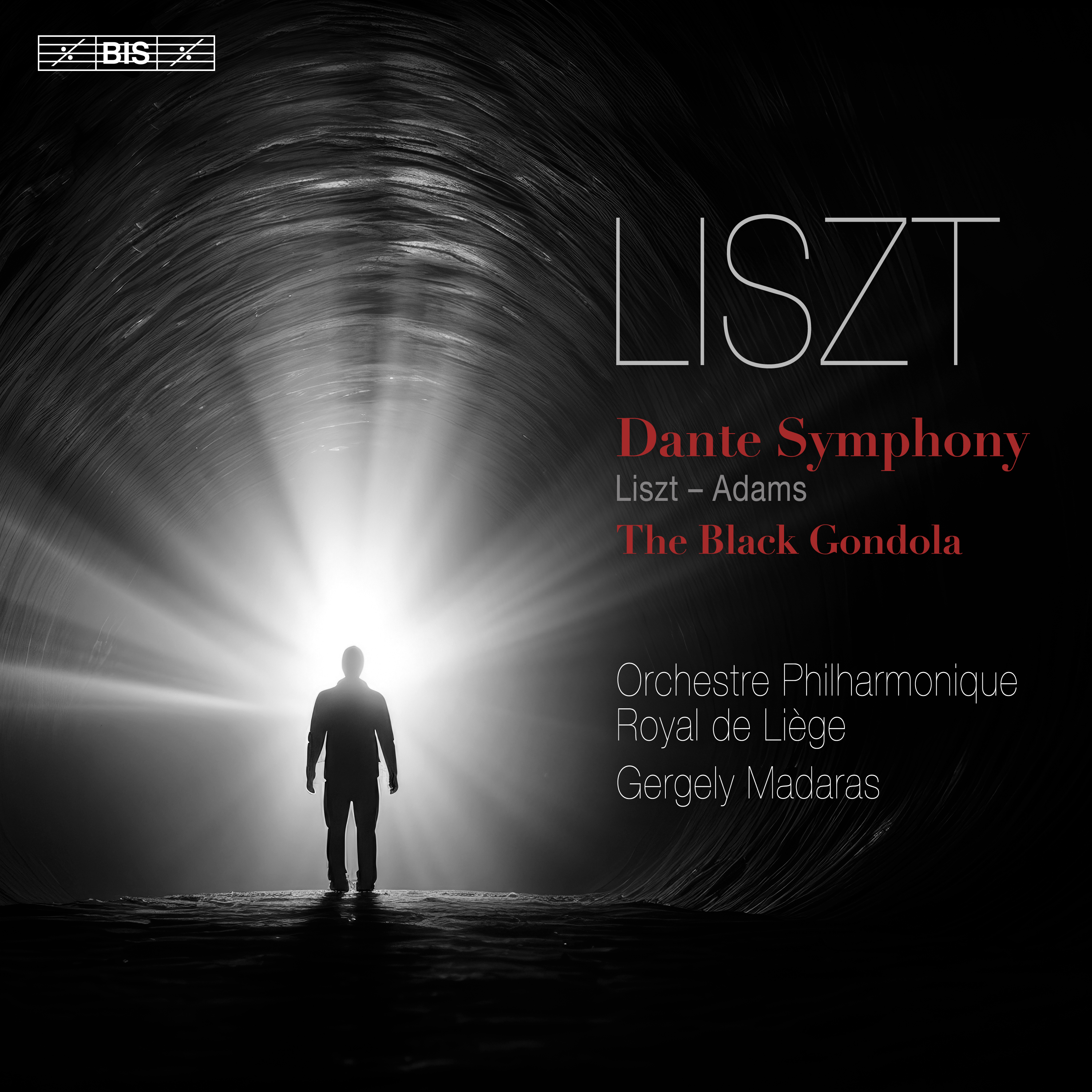
Through all these inventions, Liszt embodies for me the spirit of the Renaissance, breaking conventions and exploring many different directions at once. - Gergely Madaras
Liszt had a flair for spectacle, and his inventiveness knew virtually no bounds, as Gergely Madaras recalls: “For the work, he envisioned not only a series of projected images illustrating scenes from Dante, painted by the Prussian-born Italian artist Bonaventura Genelli, but also a wind machine to recreate the sounds of the infernal winds in the first movement — a revolutionary idea at the time! The score is also full of discoveries, including a scale that already seems to foreshadow the twelve-tone music of the 1920s. Through all these inventions, Liszt embodies for me the spirit of the Renaissance, breaking conventions and exploring many different directions at once. If Wagner was revolutionising opera, Liszt was reinventing orchestral music.”
Although he ultimately abandoned the idea of painted scenery and the wind machine, the Hungarian composer used the orchestra in unprecedented ways, playing with contrasts of timbre, rhythm and dynamics to convey the violence of the infernal circles — the world depicted in the first part of the Divine Comedy — and, later, the radiance of the world beyond. Liszt stands at the crossroads between emerging Romanticism and the exhilarating sonic innovations that composers such as Mahler and Richard Strauss would explore in the decades that followed.
The release is complemented by a rare work: The Black Gondola, John Adams’s arrangement of Liszt’s Lugubre gondola. Originally written for piano, the piece takes on an entirely new dimension in this version. The OPRL gave its first performance in Hungary, Madaras’s homeland, during their joint tour in October 2024.
The former Music Director of the OPRL first discovered the work while driving during the Covid pandemic, at a time when he was covering long distances listening to the radio. He found the music so profound and moving that he immediately wanted to pair it with the Dante Symphony. The two works share several themes: Italy, death, the afterlife, ghosts… Bringing them together simply made sense.
Recorded from 14 to 16 July 2025 at the Philharmonic Hall in Liège.