
Exclusive: The OPRL Creates a Work Entirely Composed by an AI Tool — a First in Belgium!
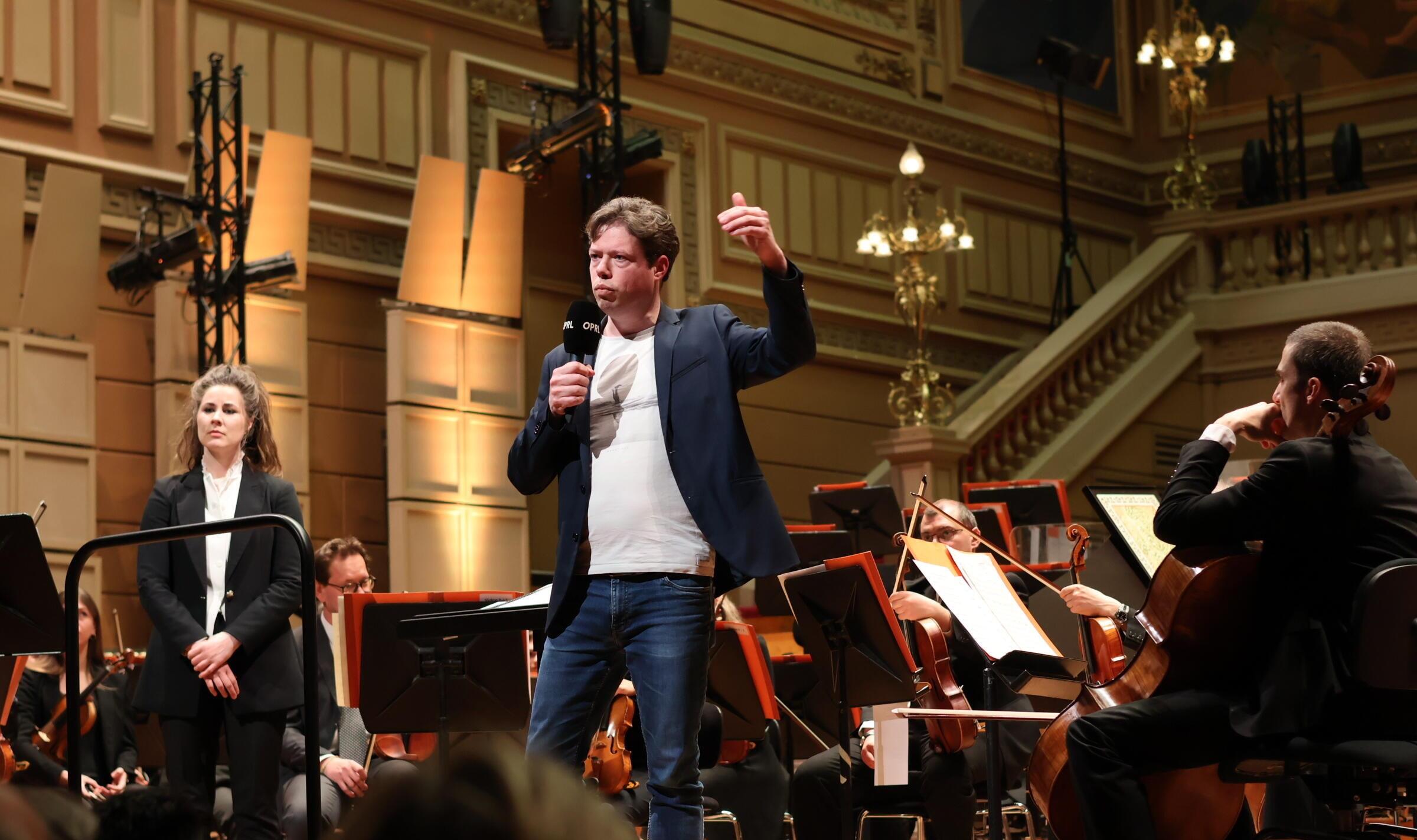
On April 1 and 2, 2026, the Orchestre Philharmonique Royal de Liège became the first Belgian orchestra to present a musical work fully generated by artificial intelligence: Danse de l’Aube (which can be heard in full below). The composition was created as part of the “Music Factory” concert series, which explores a specific theme in depth at each session.
The occasion was too good, around April 1st, not to propose the theme “What the Fake?!”. Our host, Pierre Solot, explored with wit the world of plagiarism and other musical counterfeits—a programming choice perfectly in tune with the date. This experience serves as a proof by absurdity that humans are still needed in musical creation. Moreover, the OPRL is determined to continue highlighting genuine creators: its roster of commissions for composers is already well filled for the coming years.
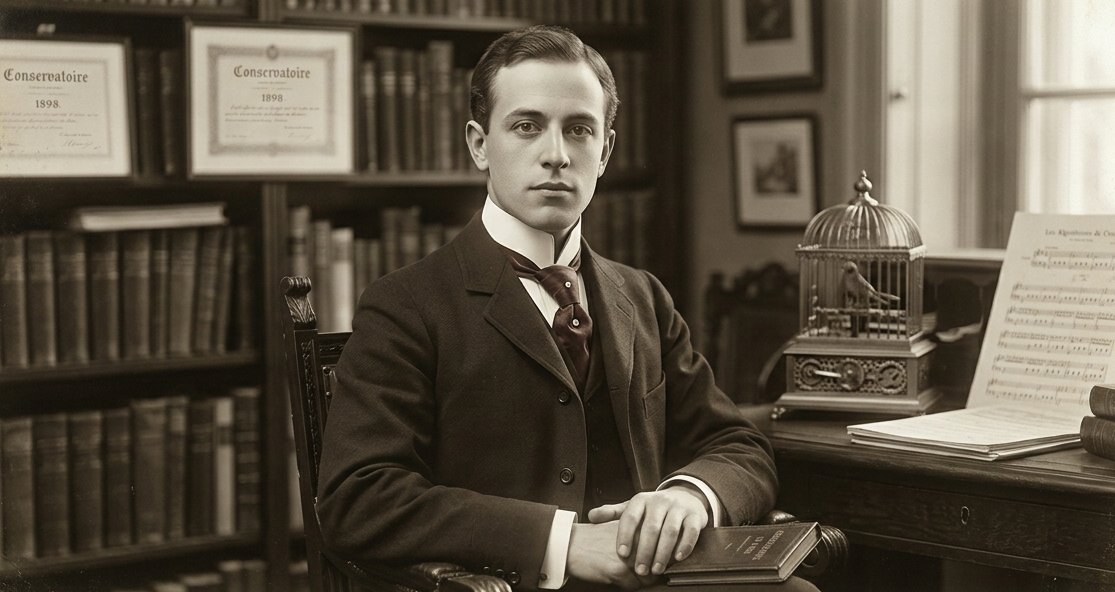
Photo of Isidore Archambault, circa 1899 © Gemini_Generated_Iers 1899 © Gemini_Gemerated_Image
Drawing on storytelling strategies similar to those found in contemporary popular music, the orchestra’s team asked a generative AI tool to invent a name and construct an elaborate narrative around a fictional composer. Isidore Archambault (1874–1941) emerges as a transitional composer, born in Montreal into a family of luthiers, trained at the Paris Conservatory, and engaged in an attempt to synthesize classical counterpoint with the harmonic boldness of Impressionism. A solitary figure fascinated by automatons, he is said to have designed a “composing machine”, ironically anticipating today’s artificial intelligence. His imaginary catalogue—including Les Murmures de l’Automate (1908) and Les Algorithmes du Cœur (1939), as well as a symphony incorporating industrial sounds and an opera about the loss of creative control—explores a constant tension between mechanism and expressivity, calculation and sensitivity.
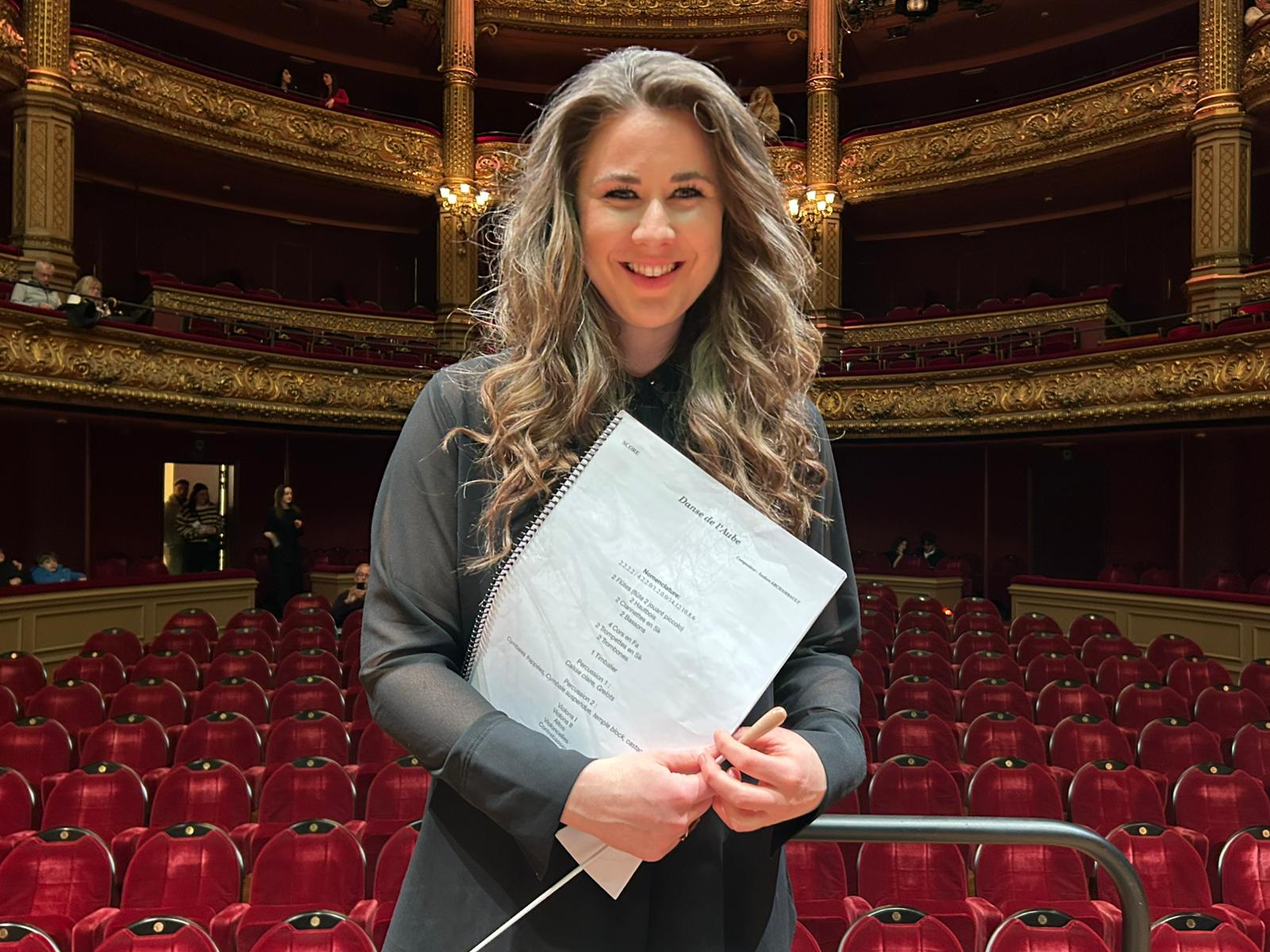
Conductor Maria Fuller holding the score of Isidore Archambault
While the creation of Danse de l’Aube may be seen as a playful gesture, it also represents a highly instructive experiment, both in terms of the complexity of its development process and the nature of its final result, carefully refined through collaboration with professional musicians. This unprecedented initiative in Belgium raises important questions: what does it still mean “to compose”? Is the act limited to generating sounds, or does it involve assisted creation? Can a work exist without human intention? Is it possible to evoke emotion through prompts and algorithms, or is such an approach ultimately devoid of meaning? Each listener may form their own opinion—Danse de l’Aube has proven capable of both captivating audiences and leaving them indifferent.
Relatively brief (5 minutes 20 seconds), the work (see video below) is written in a joyful Romantic style for full orchestra, featuring strings, woodwinds, brass, and percussion—parameters initially defined by Robert Coheur, OPRL’s Director of Programming. Its public premiere at the Salle Philharmonique in Liège, conducted by the young Canadian conductor Maria Fuller, highlighted another essential aspect: the qualitative transformation brought by human interpretation.
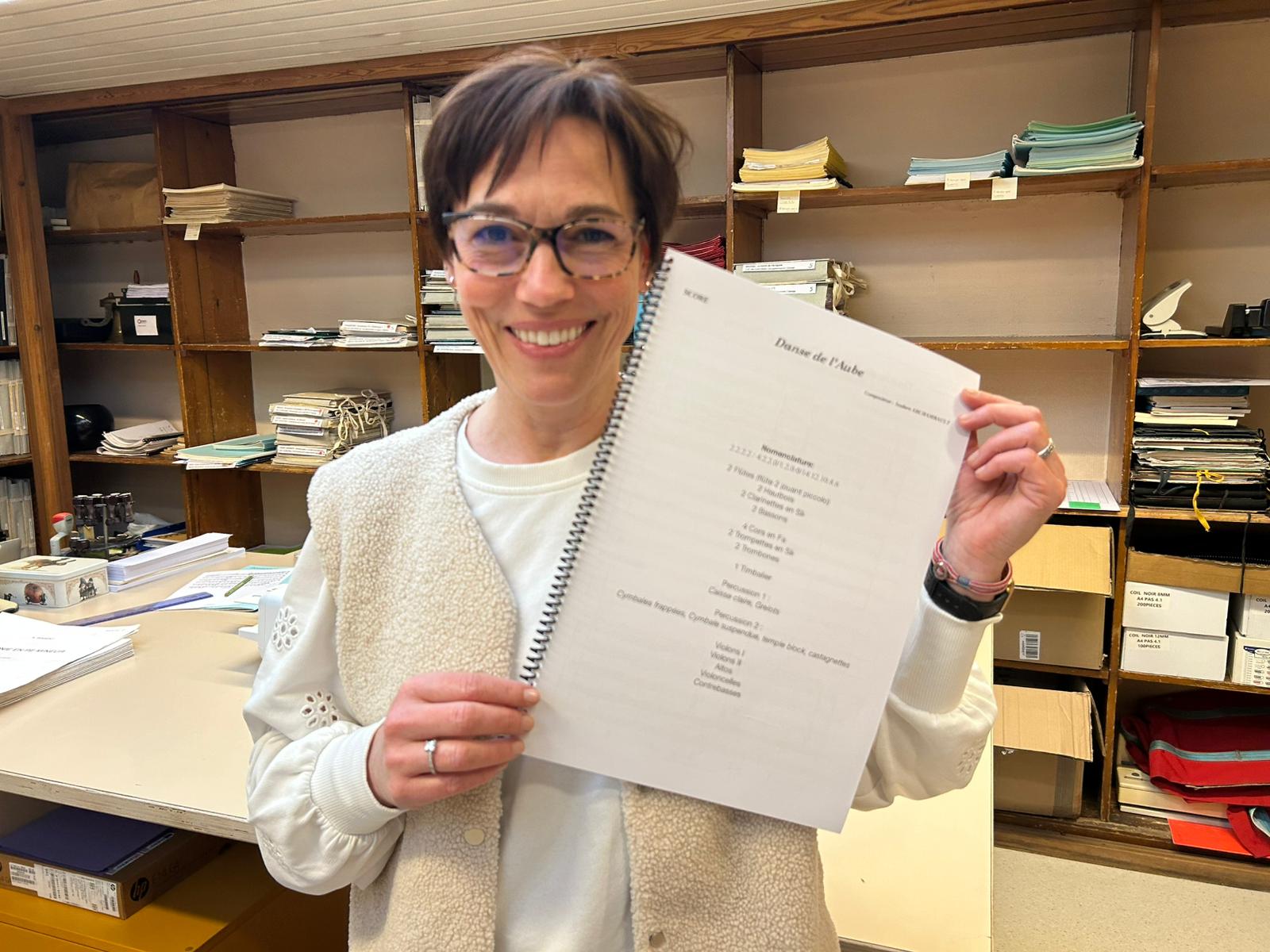
Christelle Heinen, OPRL librarian
Its genesis reveals a highly complex process. Each stage—documented in detail thanks to the remarkable work of Christelle Heinen, OPRL librarian and project lead—exposes the current limitations of AI technologies. While the AI-generated audio proved convincing, the generation of usable scores was disastrous. It required the trained ear of Bertrand Luzignant to produce orchestral parts playable by musicians. This experiment clearly highlights the persistent gap between automated sound generation and written musical notation, ultimately reaffirming the essential role of human expertise in transforming sound into score.